

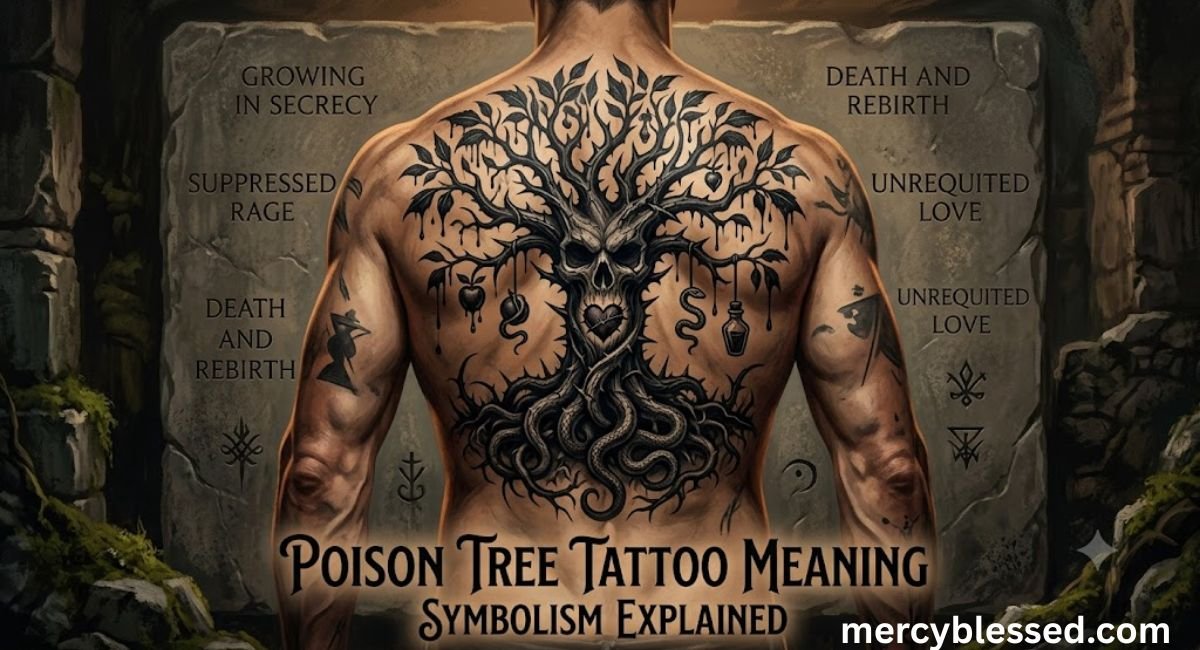
A Poison Tree Tattoo Meaning isn’t conventionally pretty, and that’s the point. Twisted branches, cracked bark, and a single glowing apple make it one of the most emotionally loaded designs in modern ink culture. This guide covers where the symbol comes from, what it represents across relationships and cultures, and how to think about getting one yourself.
What Does a Poison Tree Tattoo Really Mean?
At its core, a poison tree tattoo represents suppressed anger that grows instead of fading. It’s a visual metaphor for what happens when emotions are bottled up rather than spoken out loud.
The design usually leans dark on purpose:
- Gnarled or twisted branches
- Cracked, aging bark
- Thorns instead of soft leaves
- A single bright or dripping apple as the focal point
The unsettling look isn’t a design flaw. It mirrors the emotion the tattoo is meant to capture — something small and quiet that turned into something dangerous.
Poison Tree Tattoo Symbolism Explained
Beneath the surface, this tattoo works on several symbolic levels at once:
| Symbol Element | What It Represents |
|---|---|
| Roots | The origin of a hidden emotion or unresolved conflict |
| Trunk/branches | The slow, silent growth of resentment over time |
| Poisoned apple/fruit | The final, harmful result of unspoken anger |
| Bare or cracked bark | Emotional exhaustion or inner damage |
| New buds or blossoms (in some designs) | Healing, awareness, or growth after pain |
Most people choose this tattoo not to glorify anger, but to acknowledge it — and to remind themselves what happens when feelings are left to fester instead of being addressed.
Literary Meaning Behind the Poison Tree Tattoo
The poison tree tattoo didn’t start in a tattoo studio — it started on a page. That literary root gives the design more intellectual weight than a generic tree tattoo. Corrupted or poisoned trees have long appeared in storytelling as symbols of hidden danger and betrayal disguised as beauty, but the specific version most people ink today traces to one particular poem.
William Blake’s A Poison Tree Tattoo Meaning
William Blake wrote “A Poison Tree” in 1794 as part of his collection Songs of Experience. The poem is short, only sixteen lines, but its message has outlived centuries.
The basic story:
- The speaker is angry with a friend, talks about it, and the anger disappears.
- The speaker is angry with a foe, stays silent, and the anger doesn’t go away.
- That silence gets “watered” with fake smiles and hidden resentment.
- The anger grows into a tree that bears a poisoned apple.
- The enemy eats the fruit and dies — and the speaker feels a chilling sense of relief.
Blake wasn’t celebrating revenge. He was warning readers about what unspoken hatred quietly does to a person over time. That warning is exactly what people are choosing to carry on their skin.
What Does William Blake’s A Poison Tree Symbolize?
Blake’s poem symbolizes the difference between expressed emotion and suppressed emotion. Anger shared honestly resolves. Anger hidden behind politeness compounds.
A tattoo based on this poem often symbolizes:
- The cost of silence in relationships
- The danger of pretending everything is fine
- A personal reminder to communicate instead of bottling things up
- Awareness of how resentment can quietly poison a person’s own character
Psychological Meaning of a Poison Tree Tattoo
This tattoo resonates with people who’ve lived through emotional suppression — a childhood where feelings weren’t allowed, a relationship where conflict was avoided, or a habit of “keeping the peace” at their own expense. Common psychological themes tied to the design include:
- Repressed anger finally being acknowledged instead of hidden
- Emotional growth, since naming the anger is often the first step toward healing
- Self-awareness, choosing the tattoo as a reminder to process feelings rather than mask them
- Catharsis, turning an internal struggle into something visible and permanent
For many wearers, getting the tattoo is less about staying angry and more about closing a chapter of silence.
Poison Tree Tattoo Meaning in Romantic Relationships
In the context of romance, a poison tree tattoo often marks a relationship where honesty was missing. It can represent a breakup shaped by things left unsaid, a slow-building resentment that neither partner addressed, or the lesson learned from staying quiet for too long.
Some people get it after a difficult split, using the tattoo as a permanent note-to-self about the value of speaking up early.
Can a Poison Tree Tattoo Represent a Toxic Relationship?
Yes. This is one of the most common reasons people choose the design. The poison tree becomes a stand-in for a relationship that looked healthy on the outside while quietly causing harm underneath — much like the tattoo’s beautiful-but-deadly fruit.
It’s frequently paired with small details like thorns, chains, or wilted petals to reinforce that theme.
Poison Tree Tattoo Meaning in Broken Friendships
Blake’s poem contrasts a friend (anger resolved) with a foe (anger left to grow). Because of that structure, the tattoo also fits friendships that ended badly — especially ones where a disagreement was never actually talked through, and silence quietly ended things before anyone admitted it.
Does a Poison Tree Tattoo Symbolize Anger and Revenge?
It can, but it’s rarely that simple. The poem’s ending — the speaker feeling glad after the enemy dies — is meant to be unsettling, not admirable. Most wearers interpret the tattoo as a caution against revenge rather than a celebration of it.
In short: the tattoo usually represents the danger of unresolved anger, not an endorsement of getting even.
Spiritual and Biblical Meaning of a Poison Tree Tattoo
Trees bearing forbidden or dangerous fruit have deep roots in spiritual storytelling, most famously the tree of the knowledge of good and evil in Genesis. That connection gives the tattoo another layer of meaning for wearers who see it through a biblical lens:
- Temptation that looks appealing but leads to consequence
- The idea that sin or wrongdoing often grows from something small
- A personal reminder about moral choices and their long-term effects
Poison Tree Tattoo Meaning in Islamic Interpretation
In Islamic tradition, trees and fruit also carry symbolic weight, often representing the balance between good and harmful deeds, and the idea that actions — like seeds — eventually produce visible results. A poison tree tattoo interpreted through this lens can symbolize the consequences of harboring bitterness or ill intent, echoing the same core warning found in Blake’s poem: what you nurture internally will eventually show itself outwardly.
Poison Tree Tattoo Meaning in American Tattoo Culture
In the U.S., poison tree tattoos have grown alongside a wider “dark academia” trend — ink that references poems and classic texts instead of generic symbols. American studios tend to favor bold linework and high-contrast shading, often on the forearm, back, or ribs where the branching detail has room to breathe.
Poison Tree Tattoo Symbolism in the UK
Since William Blake was English, the design carries extra cultural resonance in the UK, often chosen as a nod to British literary heritage as much as personal symbolism. Fine-line and blackwork styles are especially popular there.
Why Poison Tree Tattoos Are Trending in Australia
Australia’s tattoo scene has seen a rise in nature-based symbolic designs, and the poison tree fits neatly into that movement — its literary depth and gothic-botanical look appeal to people who want ink with a real story behind it.
Small Poison Tree Tattoo Meaning and Minimalist Ideas
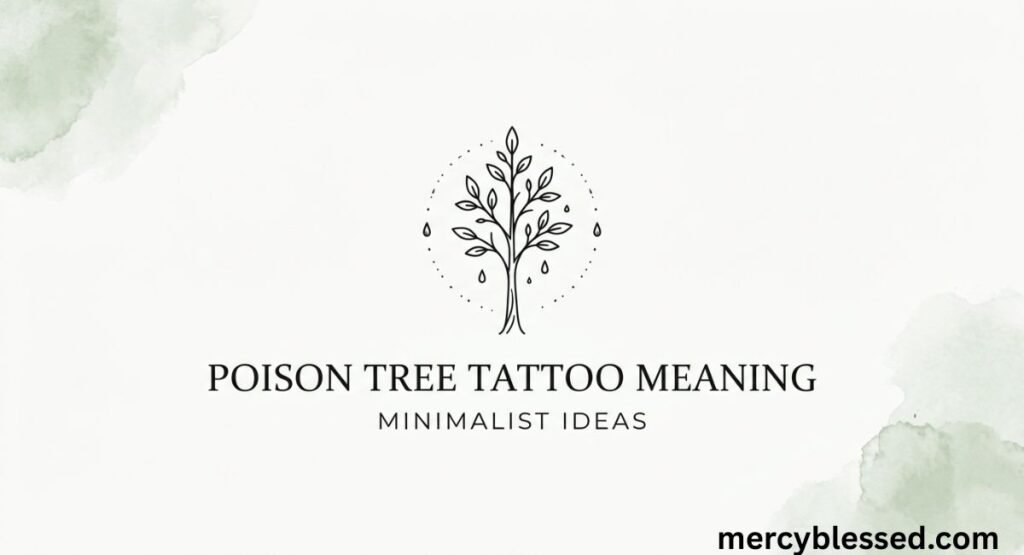
Not everyone wants a large, detailed piece, and the symbolism holds up well even in miniature. Popular minimalist takes include:
- A single bare branch with one small apple
- A simplified line-art tree silhouette
- A tiny tree paired with a short Blake quote in small script
- A wrist or ankle placement with just the tree’s outline
Smaller versions tend to focus on subtlety — a quiet, personal reminder rather than a bold statement piece.
Poison Tree Tattoo Meaning for Men and Women
The meaning behind the tattoo doesn’t really change by gender, but styling preferences often do.
| Preference | Common Choice |
|---|---|
| Men | Bold blackwork, larger scale, forearm or chest placement |
| Women | Fine-line detail, smaller scale, wrist, back, or rib placement |
| Both | Realistic shading style with added symbolic elements (moths, crows, thorns) |
Ultimately, the core meaning — suppressed emotion made visible — applies equally regardless of who’s wearing it.
Why People Choose Poison Tree Tattoos
People get this tattoo for a range of personal reasons, including:
- Marking the end of a toxic relationship or friendship
- Honoring a love of literature and William Blake’s work
- Reminding themselves to communicate honestly instead of bottling up feelings
- Representing a period of personal growth after emotional hardship
- Simply appreciating the dark, gothic aesthetic of the design
Is Poison Tree Tattoo Meaning About Revenge or Forgiveness?
It can lean either way depending on the wearer’s story. For some, it’s a symbol of the damage silence and resentment can cause. For others, getting the tattoo is itself an act of moving forward—turning a painful lesson into art rather than staying stuck in the anger. Most tattoo artists agree the strongest interpretations lean toward self-awareness rather than pure revenge.
Conclusion
A poison tree tattoo is far more than a dark, moody design—it’s a story about what happens when emotions are hidden instead of expressed. Rooted in William Blake’s 1794 poem, the symbol has grown into a meaningful choice for anyone who has lived through suppressed anger, a toxic relationship, or the quiet end of a friendship. Whether you choose a bold, detailed back piece or a tiny minimalist branch on your wrist, the meaning stays the same: what you don’t say out loud still grows somewhere inside you.
FAQs
What does a poison tree tattoo symbolize?
It symbolizes suppressed anger and resentment that grows over time instead of being resolved through honest communication.
Is the poison tree tattoo based on a real poem?
Yes, it’s based on William Blake’s 1794 poem “A Poison Tree” from his collection Songs of Experience.
Does a poison tree tattoo mean something negative?
Not necessarily — many people see it as a cautionary reminder or a symbol of personal growth rather than something purely negative.
Where is the best placement for a poison tree tattoo?
Larger, detailed designs work well on the back, forearm, or ribs, while minimalist versions suit the wrist or ankle.
Can a poison tree tattoo represent healing?
Yes, many wearers use it to represent moving past resentment and choosing awareness and honesty going forward.
Is this tattoo more popular with men or women?
Both genders choose it equally; the difference usually comes down to style and size preference, not meaning.

hi