

You just received a 💙 in a text message — and now you’re pausing, wondering what it actually means. Is it friendship? Quiet affection? Something deeper? You’re not alone in asking. The blue heart emoji meaning is one of the most searched emoji questions online, and for good reason: this small symbol carries more layers than most people expect.
Unlike the red heart, which signals romance loud and clear, the blue heart operates in subtler emotional territory. It speaks of trust, loyalty, calm support, and platonic connection, and it shapes digital conversations across WhatsApp, Instagram, TikTok, and beyond. This guide breaks down every meaning, context, and use case so you never misread a 💙 again.
The Origins of the Blue Heart Emoji
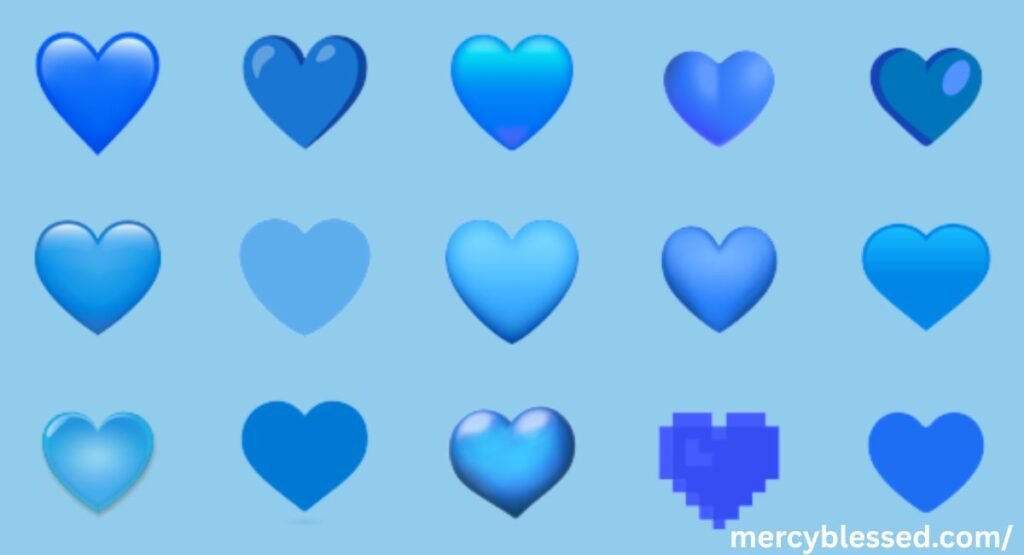
The 💙 emoji was standardized as part of Unicode 6.0 in 2010, and officially joined the Emoji 1.0 set in 2015 alongside eleven other colored hearts. From that point, it spread quickly across every major platform — iOS, Android, WhatsApp, Instagram, and X (formerly Twitter)—each rendering it in a slightly different shade, from deep navy to a brighter sky blue.
Early on, the blue heart was primarily adopted by autism awareness foundations and supporters, who used blue as a signature colour for their campaigns. Over time, the emoji expanded well beyond that original context, and today it carries a rich, evolving range of meanings rooted in color psychology and digital communication culture.
What the Blue Heart Symbolizes: Core Meanings
At its heart (pun intended), the 💙 represents a cluster of related emotions and values. Here’s a quick-reference breakdown:
| Meaning | Context |
|---|---|
| Trust & Loyalty | Close friendships, long-term relationships |
| Calm & Stability | Emotional support, reassurance messages |
| Platonic Love | Friends, family, colleagues non-romantic affection |
| Team Spirit | Group chats, sports teams, shared goals |
| Awareness & Solidarity | Autism awareness, NHS support, anti-bullying |
| Brand Reliability | Corporate social media, professional messaging |
| Friend Zone | Subtle signal of platonic-only feelings |
Trust, Loyalty, and Calm: The Emotional Core
The blue heart’s emotional power comes directly from colour psychology. Blue is universally associated with stability, sincerity, and peace — qualities that translate naturally into emoji language. When someone sends a 💙, they’re typically saying: I’ve got your back. I trust you. I’m here — steadily, without drama.
This makes the blue heart meaningfully different from the red heart, which carries the weight of passion and romance. The blue heart is quieter, but arguably more dependable. It’s the emoji equivalent of a friend who shows up when things get hard, without making it about themselves.
For that reason, it fits perfectly in messages of encouragement, solidarity, and deep platonic care — the kind of support that doesn’t need grand gestures.
Is the Blue Heart Romantic?

This is the question most people are actually asking when they search for the blue heart emoji meaning. The short answer: not typically.
The 💙 leans strongly toward platonic territory. While a red heart ❤️ or pink heart 🩷 signal romantic feelings, the blue heart signals something calmer and more grounded. It can appear in a romantic relationship — usually to express secure, steady devotion rather than fiery passion — but its default reading is friendly and supportive.
One specific interpretation worth knowing: the friend zone. In texting culture, some people use the blue heart as a gentle, non-confrontational way of signalling “I care about you, but only as a friend.” It’s not universal, but if someone consistently uses 💙 where you might expect ❤️, context and conversation history matter.
Blue Heart Meaning by Gender
From a Guy
A blue heart from a male sender most commonly communicates respect, brotherhood, or calm support. Men often reach for 💙 in group chats, when hyping up a friend’s achievement, or when they want to show care without it reading as romantic. It’s sometimes described as carrying “bro energy” — warm, but emotionally low-key.
If a guy sends you 💙 consistently in place of warmer emojis, it may signal he sees the relationship as platonic — but always read the full context of the conversation.
From a Woman
Women tend to use the blue heart to express deep appreciation, emotional reliability, and collective support. It’s common in group chats as a gesture of shared encouragement, and it frequently appears when a woman wants to say “I’m proud of you” or “I’m here for you” without implying anything romantic.
When and How to Use the Blue Heart Emoji
Friendly Support
Send 💙 when a friend is going through something tough and you want to offer calm, steady encouragement without overwhelming them. “You’ve got this. 💙”
Friends & Family
Perfect for expressing love that’s warm but not romantic — to siblings, cousins, childhood friends, or a parent. “Congrats on the new job! So proud. 💙”
Group Chats
In team or group settings, 💙 reinforces unity and shared effort. “Great work, everyone 💙” says we’re in this together, without singling anyone out.
Causes & Campaigns
The blue heart is one of the most recognizable symbols for autism awareness (especially during April’s Autism Acceptance Month), NHS staff appreciation, anti-bullying initiatives, and clean water campaigns. If you see 💙 alongside a hashtag or campaign content, it’s a symbol of collective care.
Brand Communication
Companies and organisations use 💙 on social media to project trustworthiness and reliability qualities that align naturally with the colour blue. It humanises corporate messaging without tipping into overly casual territory.
Social Media Vibes
On Instagram, TikTok, and X, 💙 appears in profile bios, captions, and comments to signal calm energy, loyalty to a community, or aesthetic preference for cooler color palettes.
Blue Heart vs. Other Heart Emojis: Key Differences
| Emoji | Colour | Primary Meaning |
|---|---|---|
| ❤️ Red Heart | Red | Romantic love, deep emotion |
| 💙 Blue Heart | Blue | Trust, loyalty, platonic friendship |
| 💛 Yellow Heart | Yellow | Happiness, warmth, positivity |
| 💚 Green Heart | Green | Nature, growth, jealousy (context-dependent) |
| 💜 Purple Heart | Purple | Compassion, luxury, sensitivity |
| 🖤 Black Heart | Black | Dark humour, grief, gothic aesthetic |
| 🩵 Light Blue Heart | Light Blue | Playful calm, similar to 💙 but softer |
The light blue heart 🩵 is worth a special mention it carries similar meanings to 💙 but tends to read as slightly more lighthearted and playful. Some users prefer it simply for the softer shade.
Blue Heart in Action: Real-Life Examples
- Supporting a friend through tough times: “I know it’s been rough. Just know I’m here. 💙”
- Team spirit in a group chat: “Finals tomorrow — we’ve trained hard. Let’s go! 💙”
- Celebrating a platonic milestone: “Cheers to 10 years of friendship, wouldn’t trade it. 💙”
- Autism awareness posts: “Today is World Autism Awareness Day 💙 — let’s listen, learn, and include.”
- Brand messaging: “Thank you for trusting us with your data. We take that seriously. 💙”
Different Symbolism: Blue in the Wider World
The power of the 💙 emoji doesn’t exist in isolation—it draws from deep cultural associations with the colour blue:
- Water and depth: The ocean, rivers, and rain. Blue hearts often appear in posts about seaside trips, water sports, or marine conservation.
- Winter and cool tones: The visual coolness of blue makes it a natural fit for winter-themed content.
- Spirituality and peace: In many traditions, blue represents calmness, meditation, and trust in something larger than oneself.
- Sports teams: If a team’s colour is blue—think Chelsea FC, Manchester City, or Duke University basketball—fans use 💙 as a badge of loyalty.
Conclusion
The Blue Heart Emoji Mean 💙 is many things at once: a symbol of trust, loyalty, and platonic care; a badge of solidarity for important causes; a tool for brands to signal reliability; and occasionally, a gentle signal that someone values a friendship without romantic intent. What makes it so versatile is exactly what makes it worth understanding: context shapes everything.
Next time you send or receive a Blue Heart Emoji Mean, you’ll know it carries real emotional weight—quiet, steady, and meaningful in exactly the right way.
FAQs
Does the blue heart emoji mean romantic love?
No — the 💙 primarily signals trust, loyalty, and platonic connection rather than romantic love.
Does a blue heart from a guy mean friend zone?
It can suggest a platonic-only view, but context and the broader conversation are always the deciding factor.
What is the blue heart emoji mean, and what is it used for in awareness campaigns?
It’s widely used to show support for autism awareness, NHS appreciation, anti-bullying, and mental health initiatives.
What’s the difference between 💙 and 🩵?
Both carry similar meanings, but the light blue heart 🩵 tends to feel slightly more playful and casual than the deeper 💙.
Can I use the blue heart in professional or workplace messages?
Yes — 💙 is one of the safer heart emojis for professional contexts, as it conveys warmth without personal intimacy.
Does the blue heart emoji mean sadness?
Not directly, though it can carry a serene or reflective tone in tribute or grief-adjacent posts where calm condolence is intended.
Is the blue heart emoji gendered?
No it is widely considered gender-neutral and is used inclusively across all demographics. (Blue Heart Emoji Mean)

hi